Why a Single Coil Changes Everything About Your Wrist
You don't need a diamond to feel expensive. I've looked at enough red carpet photos and street style shots this year to know the most memorable looks rarely feature high carat stones. More often, they show a simple band of twisted metal catching the light in some unexpected way.
The recent viral video from a maker named LanAnhHandmade captures this shift perfectly. It isn't about the metal's purity or its weight in grams. The focus is entirely on movement and texture.
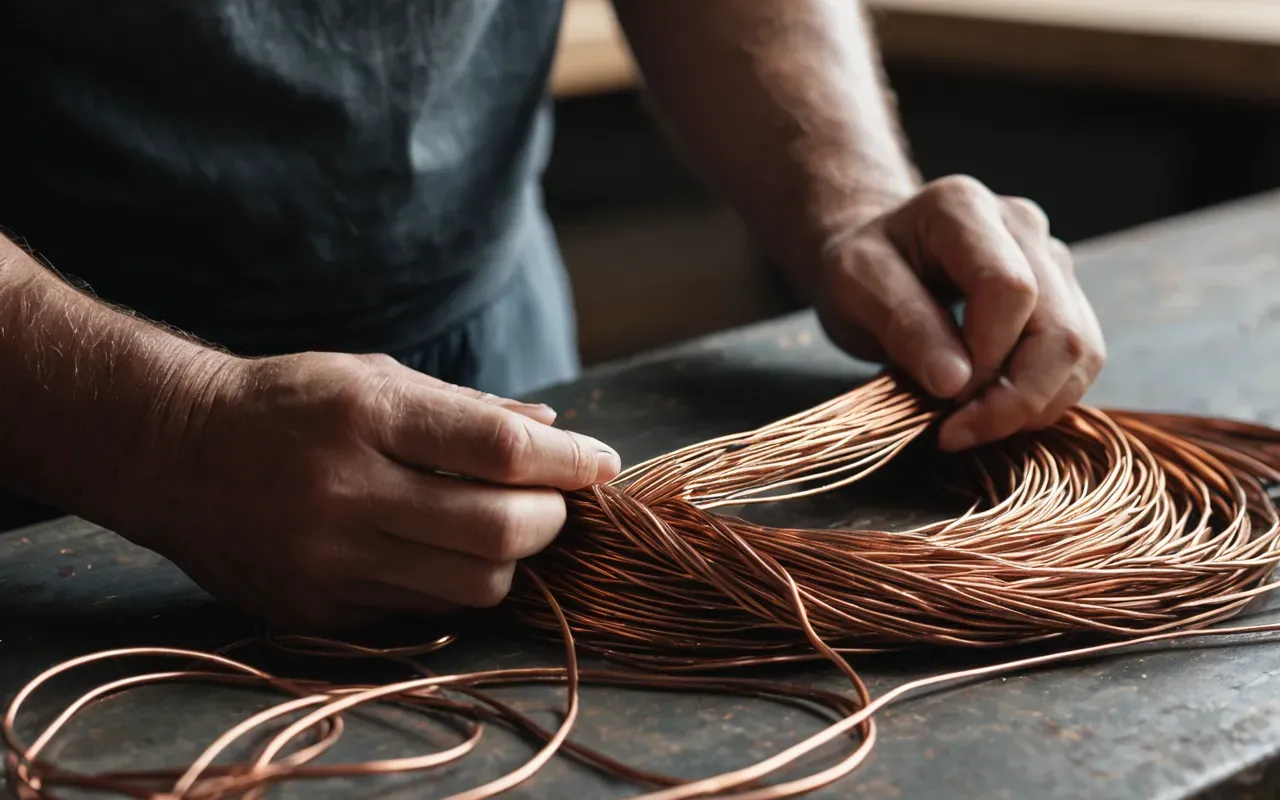
Look at the close-ups in that clip. Thin strands of copper, woven together with a precision that takes hours to master. This is not assembly line work, where robots stamp out identical shapes every minute.
It's human error that creates the beauty here. Slight variations in tension and angle give each piece a character no factory machine can replicate or match.
The Psychology of Tactile Luxury in a Digital Age
We live in an era where everything is smooth and digital. Screens are glass. Phones are flat. Even our clothes often feel synthetic and uniform.
A textured copper bracelet feels like a rebellion against that sameness. Touch the raised wires, feel the slight roughness of the metal under your fingertips — it grounds you.
Which is why I'd argue wire wrapped pieces are becoming the new status symbol. It signals that you value process over product, and craft over convenience.
Mass produced brands spend millions on marketing to make you feel inferior if you don't own their logo. But a handmade piece whispers confidence instead of shouting it.
The Hidden Economics Behind the $ Material Cost
Let's talk about money, because this is where most people get it wrong. You might think a simple copper bracelet should be cheaper than a gold plated one.
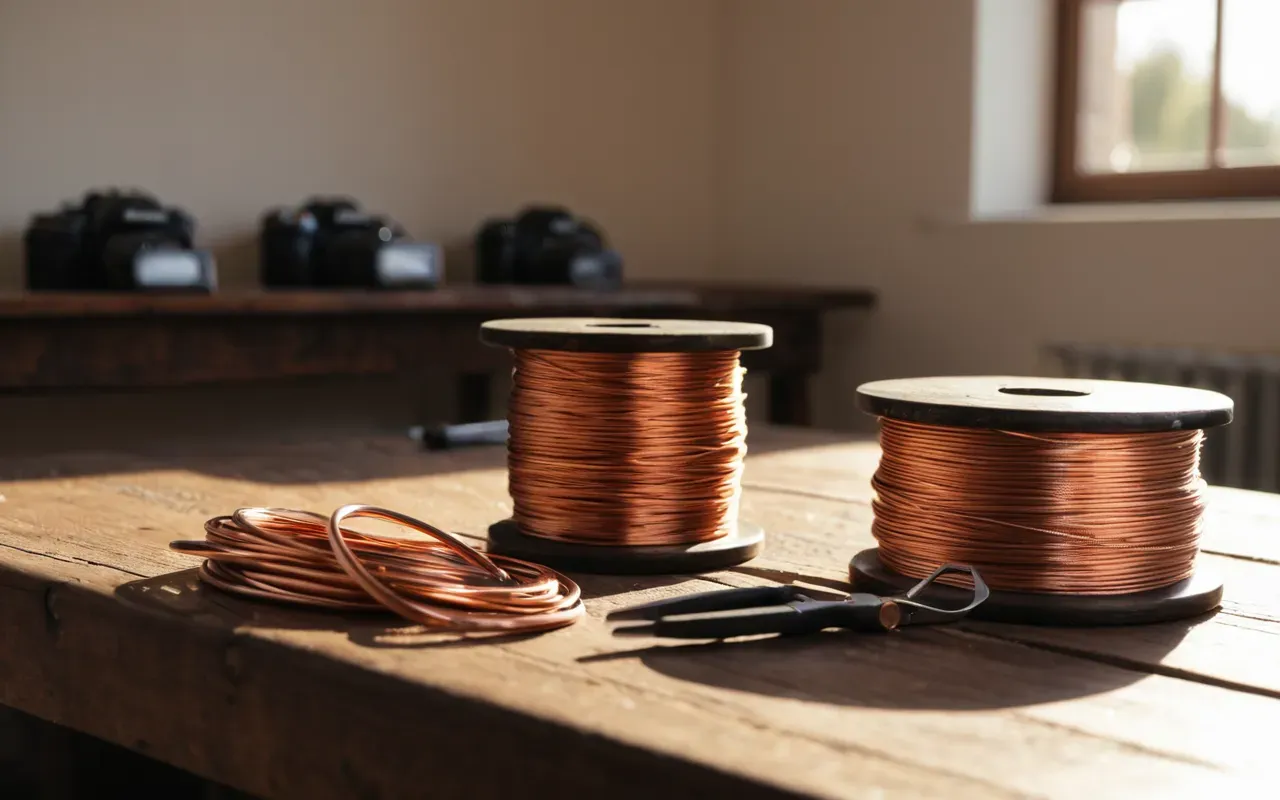
And you'd be right about the raw material. A spool of copper wire costs less than five dollars and lasts for dozens of projects.
But the value isn't in the copper. The value is in the time it takes to manipulate that wire into a structure that holds its shape without breaking.
A factory can stamp out ten thousand rings in an hour. An artisan might spend four hours making one perfect ring. That difference is what you're actually buying.
When we look at the pricing of these items in markets across the US and globally, we see a fascinating disconnect. The price reflects labor intensity rather than material scarcity.
Why Beginners Are Overestimating the Difficulty Level
I often tell people that wire wrapping is deceptively simple to start but incredibly hard to master. The first few wraps are easy enough for anyone.
But the moment you try to create a complex lattice, or a secure clasp mechanism that won't slip off your wrist in the rain, the challenge becomes real and intense.
The video tutorial I mentioned earlier is valuable because it shows the failure points. It doesn't just show you a pretty result; it shows you how to fix mistakes.
That kind of educational content is rare in the luxury space. Brands rarely teach you how their products are made, or let you see the rough edges of the process.
The Role of Patina in Long Term Value Retention
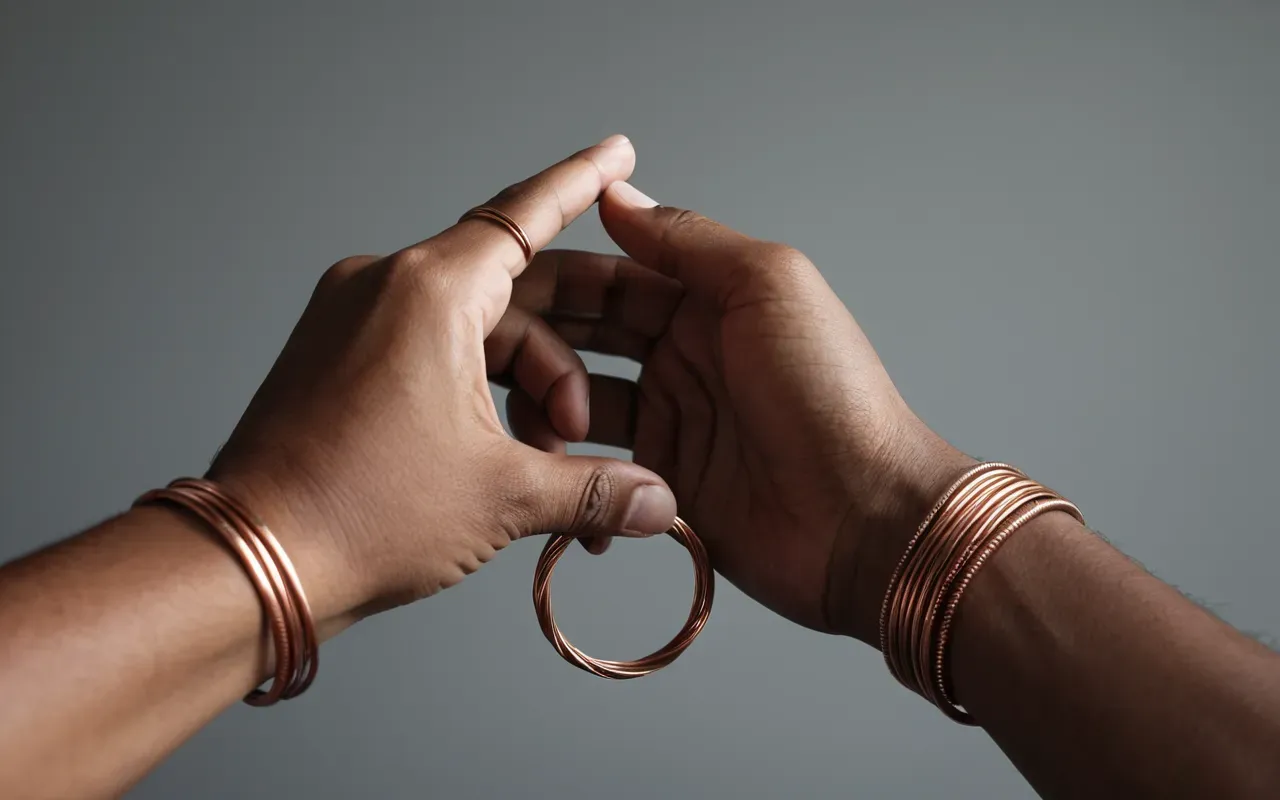
One thing that sets copper apart from silver or gold is how it ages. It develops a dark reddish brown tone over time due to oxidation.
Some people hate this. They want their jewelry to stay bright and shiny forever, like a new car in the showroom.
But I love it, because it records your life. Every drop of water, every touch from skin, adds a layer to the surface that tells a story.
Similar to how leather develops a patina, or how denim fades with wear. It makes the object feel more like it belongs to you over time.
How This Technique Outperforms Casting Methods in Durability
Cast jewelry often has weak points where the metal is thin, or where mold lines remain. These are the places that break first when dropped on a hard floor.
Wire wrapped pieces distribute stress across many small points of contact. That makes them surprisingly resilient to impact and daily wear.
I've broken plenty of cheap cast bracelets in my life. But I rarely break a well made wire wrapped piece, because the structure flexes before it snaps.
It's a crucial difference most consumers don't think about — until their favorite piece snaps in half and they're left holding two useless pieces.
The Styling Challenge of Mixing Metals Without Looking Mismatched
Copper is warm and reddish. Gold is yellow. Silver is cool and grey. Mixing them can look chaotic if you're not careful with the balance.
The secret is to use one metal as your anchor and let the others play supporting roles. If you wear a large copper cuff, keep your rings simple.
I usually start with my most distinctive piece and build around it. That prevents the look from becoming a cluttered mess of competing colors.
You can also use texture to tie different metals together. A rough hammered silver piece pairs well with a smooth copper band, because the contrast creates visual interest.
The Environmental Impact of Choosing Handmade Over Factory Made
Factory jewelry involves shipping raw materials across the world and using heavy machinery that consumes significant amounts of energy.
A local artisan who buys copper wire from a nearby supplier and works in their home studio has a much smaller carbon footprint overall.
And this isn't just about saving the planet in some abstract sense. It's about supporting local economies and creating jobs that can't be automated away easily.
When you buy handmade, your money stays in the community and supports skills passed down through generations of makers.
What This Means for the Future of Accessory Design Trends
We're seeing a clear shift away from logo heavy fashion toward quiet luxury and personal expression through unique details.
Big brands are trying to copy this by launching limited edition artisan collections, but they often lack the authenticity independent makers bring.
I believe this gap will only widen as consumers become more educated about the difference between mass production and genuine craft.
The people who understand this distinction will keep seeking out pieces that have a soul and a story behind them.
How to Spot Authentic Handmade Work at a Glance
Look for slight imperfections — they're actually signs of human touch. Machine made items have perfect symmetry and uniform weight distribution.
Hand wrapped pieces often have tiny variations in the spacing of the coils, a slight unevenness that feels organic to the eye.
Check the ends of the wires. A skilled maker will tuck them in securely and finish them with a small loop or bead to prevent scratching.
If the ends are jagged or loose, you know you're looking at a beginner piece — or a poor quality knockoff from a mass producer.
The Emotional Connection Between Maker and Wearer
There's something deeply satisfying about wearing a piece made by another human being who cared enough to make it well.
When you buy from a small maker, you're often buying into their story and their passion for the craft they love to do every day.
That connection creates a loyalty no amount of advertising can buy or replicate in the long run.
I've bought pieces from makers I'll never actually meet — yet they feel like friends. Why? Because we both love beautiful things.
The Rise of Collaborative Projects Between Makers and Designers
More and more, we're seeing independent wire artists team up with established fashion houses that are hunting for fresh ideas.
Those partnerships do two things at once: they put the makers in front of a bigger audience, and they give the bigger brands a hit of artisanal character they can't manufacture on their own.
Honestly, everybody wins. It's a real validation of the skill it takes to build these intricate pieces of wearable art.
And it hands consumers something rare — high-end design with a bit of soul, the kind that's genuinely hard to find elsewhere in the market.
Why Traditional Gold Plating Is Losing Ground to Raw Copper Finishes
Gold plating, though? It wears off. Underneath you get the base metal, and to a lot of buyers that looks cheap — or just plain dirty.
Raw copper doesn't have that problem. The color you see is the metal itself, and it ages gracefully over time.
So for anyone who wants accessories to last for years without repair, it's the more sustainable pick.
There's also the tone. Copper runs warm, and it flatters most skin tones better than the cool yellow of traditional gold.
Practical Tips for Caring for Your New Copper Piece
The best way to protect your copper bracelet is simple: keep it dry, and store it in a soft pouch away from other metals.
Got it dirty? Mild soap, warm water, and your hands. Clean the surface gently — that's all it needs.
Skip the harsh chemicals and abrasive cloths. They scratch the surface and ruin the delicate finish.
With a little bit of love and attention, your piece will stay beautiful for decades — or even longer.