The Quiet Invasion of the Boardroom
I walked into a meeting in Manhattan last Tuesday and nearly dropped my coffee. The woman across the table wore a structured black blazer, straight-leg charcoal trousers, chunky loafers. Sleek. Sharp. And undeniably gothic. Not the leather-clad, eyeliner-heavy version we usually picture. This was something else entirely. Corporate. Calculated. And it was working.
We've spent a decade treating dark fashion as a weekend rebellion — a statement piece for a gallery opening or a night out. The rules are changing. That idea that you need a separate wardrobe for the office? Fading fast. The new standard is calibration: same dark palette, same heavy textures, same layered volumes, but tuned so the look reads professional at a.m. and intense at p.m. Honestly, it's far more efficient than the old method.
Look, I get the hesitation. Most of us were trained to believe black belongs to the evening. Or to mourning. Or to the subculture. That mental framework is outdated. Strip away the dramatic makeup and the studded belts, and what's left is an incredibly versatile foundation. Clean. Consistent. And it kills the decision fatigue of choosing between navy, grey, and brown every single morning. The shift is subtle, but it's everywhere.
This isn't about dressing up. Nobody's wearing a corset to a performance review. It's about balancing rigor with softness — finding the specific accents that make a dark outfit feel human rather than cold. And it's about realizing the most expensive thing in your wardrobe might not be your bag or your coat. It might be the lack of intention behind your styling. Let's fix that. Let's look at the three pillars that actually make this aesthetic work in a modern, professional context.

The Palette Problem You Are Ignoring
Here's the thing. Most people think black is one color. It is not. Black is a family. Mix the wrong shades and your outfit falls apart instantly. I've seen it happen in fitting rooms and on the street: a cool-toned black blazer paired with a warm-toned black skirt creates a visual dissonance that looks messy, not chic. It looks like you grabbed two items from different stores without thinking.
For the office, the winning combination is deep black paired with anthracite — that dark grey sitting just below charcoal. It adds sophistication without breaking the dark mood. Reads as serious. Reads as focused. Want to shift the vibe for evening? Introduce burgundy or forest green. Same weight as black, but with a depth that feels more relaxed and personal.
But the real trick is the accent. You need a break. A solid block of black from head to toe can feel heavy, even oppressive, in a bright office. So you add a medium grey. Or a touch of ivory. A white shirt under a black blazer is the classic move for a reason: it cleanses the ensemble, gives the eye a place to rest, and makes the black look richer by contrast. Simple optical illusion. Works every time.
I used to think I needed colorful accessories to make a dark outfit pop. I was wrong. The pop comes from the material. The shine. The texture. A silver chain, a brushed metal watch, a piece of burnished brass jewelry — any of these does more for a black outfit than a bright red scarf ever could. Keeps the palette tight. Keeps the look cohesive. And it feels far more expensive than a splash of color. It's all about restraint.
Texture Is the New Color
When your palette is limited to two or three shades, texture becomes your primary design tool. You're no longer relying on hue to create interest. You're relying on surface. This is where most people fail. They wear a flat black t-shirt under a flat black blazer. Looks like a uniform. Lacks dimension. Lacks life. The solution is mixing finishes — matte against glossy, rough against smooth, heavy against light.
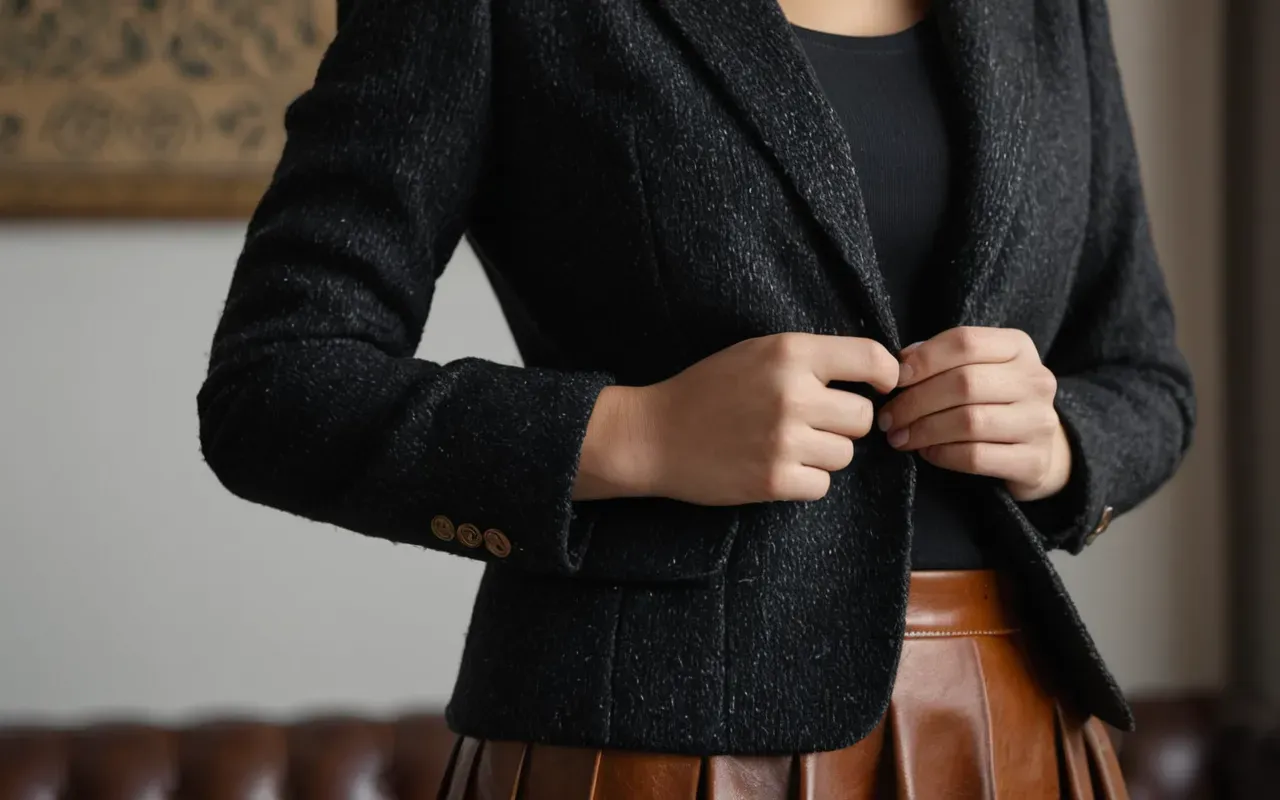
Take a look at your hands. You probably have a watch. A leather strap. That's a matte, organic texture. Now the face of the watch — glossy, reflective. That contrast is what makes the watch look good. Apply the same logic to your outfit. A heavy cotton top with a leather midi skirt creates a tactile dialogue: the cotton absorbs light, the leather reflects it. The result feels layered and intentional, even if it's all shades of dark grey.
For the office, I recommend technical fabrics. Viscose twill. Lightweight flannel. They drape well, look structured without being stiff, and hold their shape through a long day of sitting and standing. For evening, ramp up the drama. Matte satin. Hammered velvet. These catch the light differently. They feel luxurious. They signal you're ready to leave work and enter a different mode. The transition is seamless because the base stays the same.
There's a limit, though. No more than three textures in one outfit. Wool blazer, leather skirt, sheer top — that's three. Add a chunky knit scarf and you're at four. Now you're drowning. The rule is simple. Three is the cap. Enough to create complexity. Enough to look interesting. Anything more and the outfit feels cluttered, and it loses the clean, chic line that makes the aesthetic work. Keep it tight.
The -Layer Rule That Fixes Your Silhouette
Layering is where gothic chic either succeeds or fails. Do it right and you look elongated, structured, powerful. Do it wrong and you look bulky, short, messy. The secret isn't what you wear — it's how the hems interact. I call it the vertical line principle. You want your layers to create one long, unbroken line from neck to ankle. Any break in that line shortens your figure.
Start with the base, your innermost layer. A cotton top. A thick lace bodysuit. Close to the body. It creates color continuity — it's the foundation. Next, the mid-layer: a long vest, a thin cardigan. This one should hang loose, adding volume without weight. Finally the outer layer — a structured blazer, a trench coat. This defines your shape and gives the outfit its architecture. Get this order wrong and the whole thing collapses.
Now, the hem rule. Your outer layer should be the longest. Your mid-layer should be medium. Your base layer should be the shortest. Wait — no. That's the common mistake. For a gothic chic look, you actually want the opposite to elongate the line. Outer layer cropped or medium. Mid-layer long. Base tucked or fitted. This creates a flow. It pulls the eye down. It makes you look taller. Simple trick, and it changes everything.
I tested this last week. Cropped biker jacket over a long wool vest, fitted black t-shirt underneath. I looked sharp. Modern. Then I swapped the cropped jacket for a long trench coat. Heavy. Short. The only thing that changed was the length of the outer layer. It's not about the style of the jacket — it's about the proportion. And proportion is what separates a professional look from a costume. It's the detail that makes the outfit feel right.
Why Cheap Accessories Are Killing Your Look
This is the part that hurts. The part that costs money. You're wearing a high-quality black blazer and a well-tailored trouser, but you pair it with a shiny, plastic-looking handbag — and you've just undermined your entire outfit. The gothic chic aesthetic relies on a sense of weight and permanence. Cheap accessories feel light. They feel temporary. They break the mood. And they make the whole look feel cheap, no matter how expensive your clothes are.
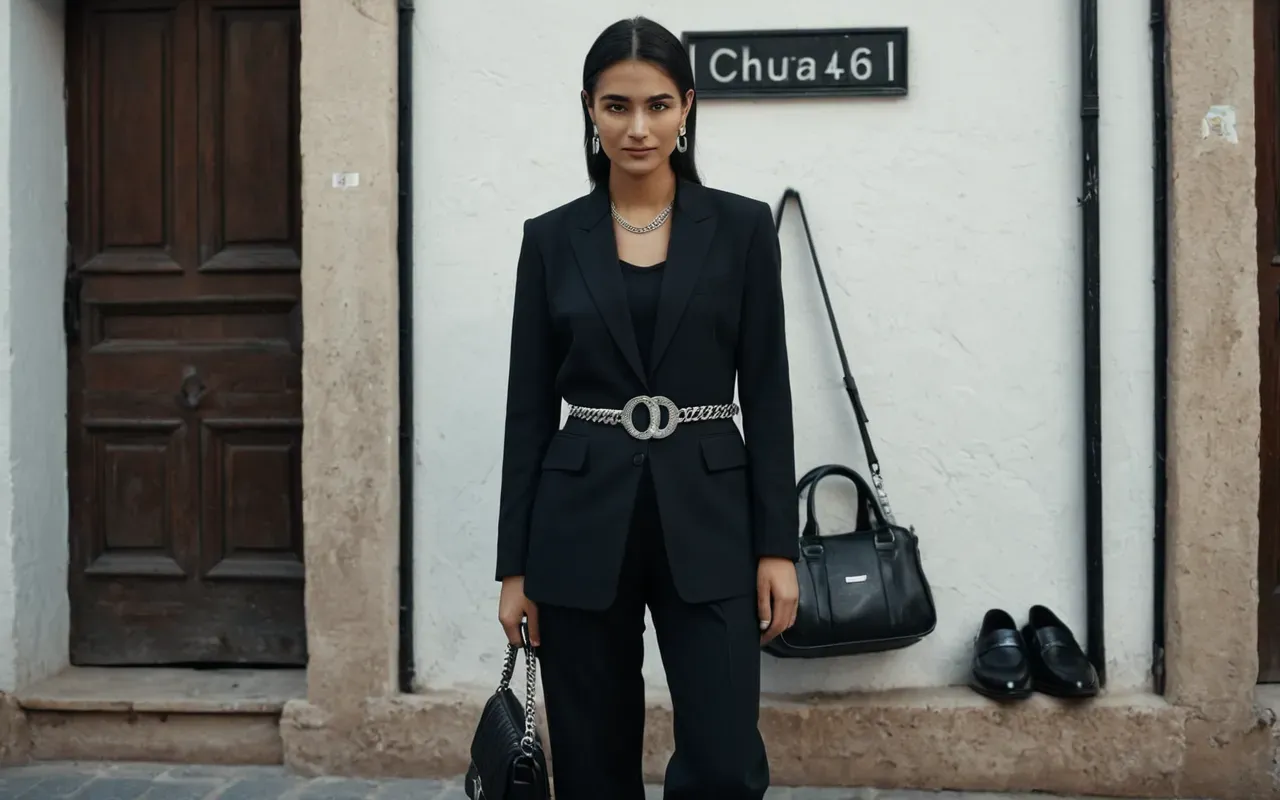
You don't need a designer bag. You don't need a diamond necklace. But you do need accessories that feel substantial. A hard shoulder bag with a dark chain. A minimalist cuff bracelet. A pair of oxidized teardrop earrings. These items have weight. They have presence. They feel like they were made to last. And they complement the dark, serious tone of the outfit. They don't fight for attention — they support it. That's the difference between a good accessory and a great one.
I've watched plenty of people try to fix a flat outfit with a loud, colorful accessory. A bright scarf. A neon bracelet. It never works. Feels forced. Feels like you're trying too hard. Instead, look for subtle metallic accents. A silver chain belt. A gunmetal watch. A burnished brass ring. These add interest without adding noise. They fit within the palette. They respect the aesthetic. And they make the outfit feel complete. Small detail — but it's the one that matters.
If you want a specific piece to anchor the look, consider a choker. A grosgrain ribbon choker is perfect. Simple. Dark. It frames the face. Adds a touch of structure to the neck area. And it's affordable. You can find high-quality versions that look far more expensive than they are. Pair it with a simple white shirt and a black blazer, and you've got a look that's both professional and edgy. Low risk, high reward.
The -Second Transition Trick
The best part about this aesthetic is the versatility. You don't need to change your entire outfit to go from work to dinner. You swap one piece. I call it the -second transition. One simple swap that changes the vibe of the whole look — and it takes less time than finding your keys. Efficient. Smart. It makes you look like you have a stylist on retainer. You don't need one. You just need this trick.
For the office, you're wearing a cotton top. Clean. Professional. Safe. For the evening, you swap that cotton top for a bodysuit in opaque lace or matte satin. That's it. That's the change. The blazer stays. The trousers stay. The shoes stay. But the top changes. And suddenly the outfit feels different. More intimate. More dramatic. More personal. The structure remains, but the mood shifts. Powerful move.
Another option: swap your loafers for mid-heeled ankle boots. Adds a bit of edge. A bit of height. It changes the line of the leg. And it signals you're ready for the night. You can also add a sculptural earring — a single, large piece that catches the light. It draws the eye to your face. Adds a focal point. Completes the look. These small changes have a big impact. They're the details that make the outfit feel finished.
Avoiding the Common Mistakes
Even with the right pieces, you can still mess it up. And it usually comes down to proportion. Oversized blazer? Your trousers must be slim. Full skirt? Your top must be fitted. You cannot have two volumes at the same time. It creates a bulky silhouette. Looks messy. Looks like you're hiding in your clothes. The goal is a clean line. Define your shape. Look intentional. Which means balancing volume with structure.
Another mistake is mixing blacks. As I mentioned earlier, black is a family. Mix a cool black with a warm black and it looks wrong. Looks like a mistake. It breaks the cohesion of the outfit. To avoid this, test your items in natural light. See if they match. If they don't, choose one tone and stick with it. You can always add a grey or an ivory piece to break up the dark mass — but do not mix two different blacks. Subtle error, sure. Still noticeable.
Finally, avoid too much shine. A total look in glossy leather or satin can feel overwhelming. Costume-like. Like you're trying too hard. Instead, mix matte and glossy. Keep the base matte. Add a glossy accent. A shiny bag. A shiny belt. A shiny earring. This creates balance. Creates interest. Keeps the look grounded. It's the difference between a chic outfit and a loud one. And in a professional setting, that difference is everything.
The Final Check Before You Leave
Before you walk out the door, ask yourself three questions. Is the palette consistent? Can you read the colors from a meter away? Are there a maximum of three textures — and do they interact with each other? Is there a single chic accent that guides the eye? If the answer to all three is yes, your outfit is ready. Professional. Stylish. Uniquely you. If the answer is no, make one small change. Swap the top. Add the belt. Change the shoes. Fix the detail. And then go out there and own the room.
Gothic chic isn't a trend. It's a way of thinking. The whole game is finding balance — between rigor and softness, between professional and personal, between dark and light. And here's the good part: it works for everyone. Efficient. Versatile. Undeniably stylish. So next time you're standing in front of your closet with no idea what to wear, go back to these rules. Think about the palette. Think about the texture. Think about the layer. You'll land on a look that works for you. Every time.
Want to push it further and put your own stamp on a dark wardrobe? Take a look at how to stop wasting money on cheap accessories. One good piece of handmade jewelry can turn a plain black outfit into a statement — it brings a level of craftsmanship and individuality that mass-produced stuff just can't touch. Small investment, and it pays off in style every single day. Honestly, it's the kind of detail that makes all the difference.