The Quiet Rebellion in Your Jewelry Drawer
Look at your earrings. Really look at them. Chances are they came off a factory line you'll never see, stamped out by the thousands. Cheap alloy underneath. A plastic backing that feels flimsy and smells faintly of chemicals.
Now pick up something an artisan made. Feel that? It has weight. The texture is uneven — because hands shaped it, not a machine. Every curve and bead carries a story.
This isn't just about aesthetics. It's a rejection of the throwaway culture that runs modern retail. And honestly? We're watching a real pivot toward brands that put people ahead of profit margins.
The numbers back it up. Over the last few years, independent designers have grabbed a foothold that big conglomerates simply can't buy their way into with bigger ad budgets.
Why Upcycled Materials Are The New Luxury Standard
Take Yam, a brand based in Queens. They work with upcycled materials to make chokers that read expensive but carry zero environmental guilt.
The Bonar Pearl Choker is a prime example. Pearls never go out of style — but when they come from sustainable sources and local vendors, the whole value proposition shifts.
I've worn plenty of pearl necklaces. Most feel sterile. This one feels alive, because it was made with intention instead of assembly line speed.
Here's the core issue. Luxury used to mean rare materials sourced at any cost. Now it means transparency — and genuine care for the hands crafting your adornments.
The Hidden Cost of Cheap Sparkles
When you drop five dollars on a pair of studs from a fast fashion retailer, you're funding a system that discards workers and materials alike.
Contrast that with brands like Caralarga. They take textile waste from a factory in Mexico and turn it into beautiful hand-crafted pieces.
The Orejas de Conejo earrings capture that philosophy perfectly. Chic and modern, yes — but they also carry the weight of recycling consciousness.
It's a stark difference. One item ends up in a landfill after a single season. The other becomes a keepsake, because you know its origin and its impact.
How Indigenous Heritage Is Redefining Style in America
There's a deep cultural conversation happening right now about who gets to wear what. Brands like B. Yellowtail are leading it, with intention and respect.
Bethany Yellowtail doesn't just sell accessories. She's built a platform for Native American and First Nation artists to showcase their craftsmanship.
The Crescent Moon Studs are intricate and beautiful. They honor tradition while sliding right into a modern wardrobe.
This isn't appropriation. It's appreciation — with the money flowing directly to the creators of these designs.
Supporting Artisans Over Algorithms
Algorithms push whatever sells fastest. Human intuition pushes what's meaningful. Big difference in how we curate our personal style.
Buy from MAIDA and you're supporting Gino Antonio and his Navajo silversmithing techniques, passed down through generations.
Each piece is made to order. So your choker is yours alone — nobody else has that exact barbed wire design.
In a world of duplicates, owning something singular is the ultimate form of self-expression and ethical consumption.
The Global Network Behind Your Local Statement Piece
It's tempting to write off handmade jewelry as a small niche. But the supply chains behind it are surprisingly complex — and global.
Soko proves the point. Based in Kenya but founded by women from different backgrounds, they use technology to empower local artisans.
Their virtual factory model delivers consistent quality while keeping production local and ethical. Smart business, too.
The Konza Horn Threader Earrings are a testament to that hybrid approach. Modern in feel, traditional in texture.
Connecting Dots Across Continents
Artisan and Fox works with people from Vietnam to Guatemala, aiming to spotlight extraordinary ethical craftsmanship in a global market.
The gold hoops from Nairobi are simple yet stunning. Proof that simplicity doesn't require exploitation.
This kind of global connectivity is reshaping how Americans see their purchases. We're no longer just consumers — we're participants in a larger story.
Every purchase votes for the world you want to live in. Choose handmade, and you're choosing a future where creativity beats volume.
What This Means For Your Daily Style Routine
You don't need ten new pieces. You need one that makes you feel good about your choices and your impact.
Mixing a mass-produced item with an artisan piece creates balance. It says you care about style — and substance.
Looking for inspiration on building a wardrobe that reflects your values? Check out the 9 handmade jewelry trends defining style in 2026.
Style isn't just about looking good. It's about feeling aligned with your principles every time you get dressed in the morning.
The best accessories tell a story you're proud of. They spark conversation and mirror your deeper values.
Small Changes With Big Impact
Start with one pair of earrings. Or a single necklace. See how it makes you feel next to your old fast fashion finds.
Notice the difference in weight and detail. Notice how people ask about it — because it looks nothing like store-bought.
That's the power of handmade. It stands out because a human being made it, with care and attention to detail.
You're not just buying an object. You're supporting a livelihood and promoting a better way of doing business in fashion.
The shift is already underway. You just need to join it — and make your choice count for the planet.
The Future of Accessories Is In Your Hands
We're moving away from disposable fashion toward lasting pieces that hold meaning and memory over time.
Brands like SVNR prove ethics and aesthetics can coexist beautifully, with no compromise on style or quality.
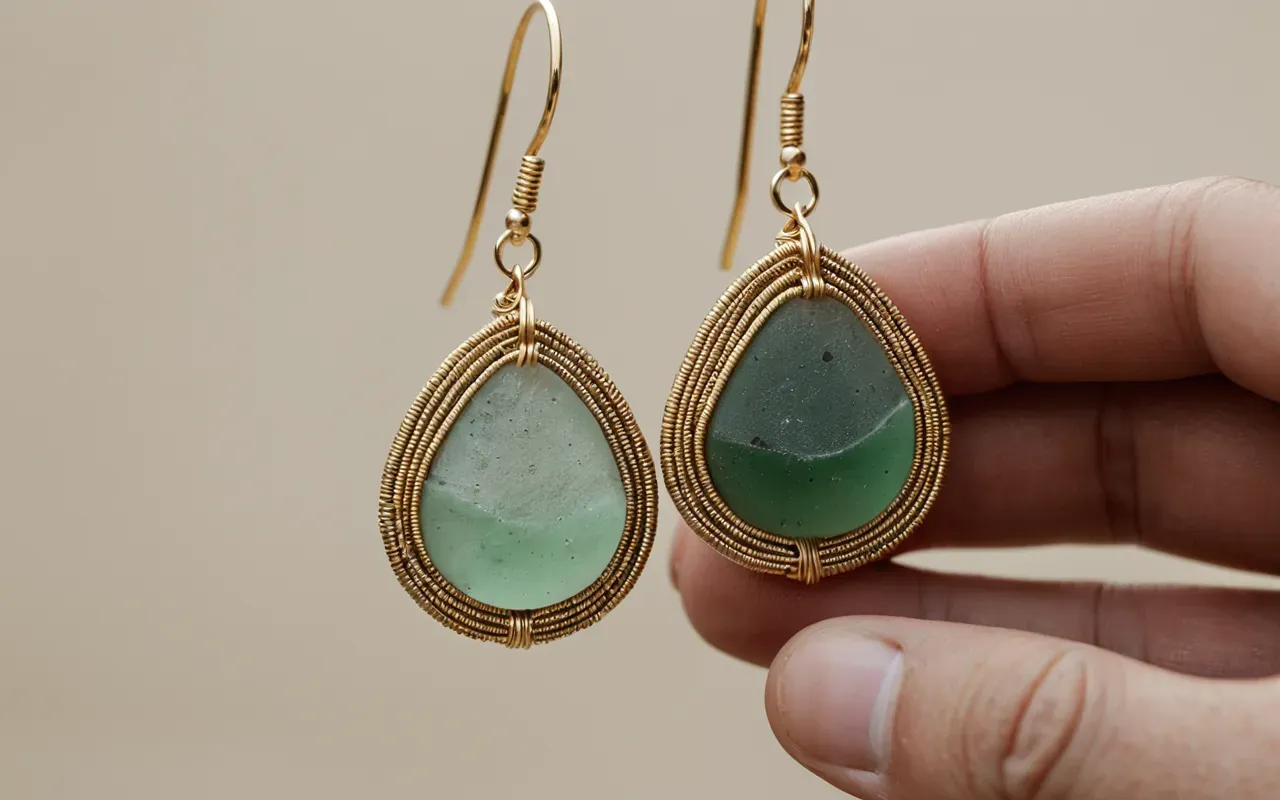
The Abaco stud uses gold wire-wrapped seaglass. Elegant and eco-friendly, all at once.
This is the direction we need to go. Creating beauty that doesn't cost the earth or its people.
Your jewelry box is a reflection of your values. Make sure it reflects the kind of world you want to live in.
Making The Switch To Ethical Artisan Brands Today
It starts with research. Look for brands that are transparent about their sourcing and labor practices.
Read the labels. Talk to the makers when you can. Ask where your materials come from.
Want to see how this stacks up against luxury brands? Read about why an Italian award is threatening mass produced jewelry.
The choice is yours. You can keep buying the same plastic-coated metal as everyone else.
Or you can choose a piece that supports an artist, protects the planet, and looks stunning for years to come.
The future of fashion is bright — because it's being shaped by people who care about more than just profit.
Join the movement. Your jewelry box is waiting for a new chapter that feels good to wear and even better to know.